Adding Flavor to Your Designs: The Fruit Typeface Experience
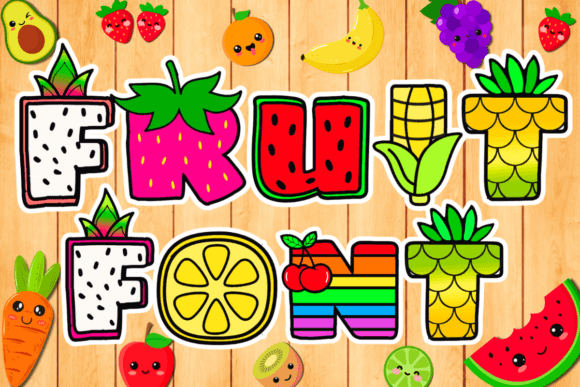
There is a specific moment in design where functionality meets absolute joy. Usually, we treat typography as a silent workhorse—something meant to convey information clearly and professionally without drawing too much attention to itself. But what happens when your project demands a shout rather than a whisper? What happens when you are designing for a children’s party, a summer festival, or a juice bar brand, and a standard sans serif just feels too sterile? This is where the "Fruit" typeface steps in, offering a solution that is as visually delicious as it sounds. It is not merely a collection of letters; it is a decorative display font where every character is a hand-crafted illustration resembling a different piece of fruit.
A Visual Feast for Creative Projects
The immediate appeal of Fruit lies in its personality. In the world of modern typography, we often see a trend toward clean lines and minimalism, but there is always a time and place for maximalism and playfulness. This font is designed to be the centerpiece of your layout. Imagine a letter "A" shaped like a slice of watermelon, or a "B" that mimics the curves of a pear. The color palette is vibrant, utilizing the natural hues of produce to create a full-color experience right out of the box.
For designers and content creators, this offers a massive advantage: it includes high-quality PNG files of the letters in full color. This means you aren't just limited to typing out words in a design program; you can drag and drop individual letters as graphic elements. If you are working on a poster or a social media graphic, you can layer these letters over photos, resize them, and arrange them manually for a collage effect that feels organic and unique. It transforms the act of typography into illustration.
Matching the Fruit Typeface to Your Brand Identity
Choosing the right font is a critical part of brand identity, but it requires a keen understanding of your audience. Fruit is undeniably a niche typeface, but within that niche, it is incredibly powerful. If you are a small business owner running a smoothie shop, a vegan cafe, or a summer camp, this font instantly communicates your value proposition. You don’t need to explain that you are "fresh," "natural," or "fun"—the typography does the heavy lifting for you.
However, as with any bold display font, readability is a key consideration. Because Fruit is heavily stylized, it functions best as a header or a logo mark. Trying to write a long paragraph in this font would likely tire the reader’s eyes and obscure your message. The golden rule of typography applies here: use decorative fonts for impact and standard fonts for information. For example, if you are designing a logo for a fruit delivery service, you might use the Fruit typeface for the company name to grab attention, but pair it with a clean, geometric sans serif font for the tagline and contact information. This contrast ensures that your brand looks professional while still maintaining a playful edge.
Practical Applications: From Packaging to Merchandise
The utility of a font like Fruit extends far beyond digital screens. In packaging design, the tactile experience is king, and visual cues need to be immediate. Consider a jam jar label or a packet of dried fruit snacks. Using this typeface allows the packaging to stand out on crowded shelves. The colorful letters act almost like stickers, creating a "scrapbook" aesthetic that appeals to both children and adults looking for artisanal or fun products.
For those in the merchandise business, the included PNG assets are a game-changer. Think about tote bags, t-shirts, or mugs. Instead of a monochrome print, you can utilize the full-color fruit letters to create vibrant, eye-catching merchandise. This is particularly effective for limited edition runs or seasonal campaigns. Furthermore, for event planners and crafters, the font is perfect for creating invitations to summer barbecues, birthday parties, or health and wellness retreats. It sets the mood before the guest even arrives.
Integrating Vibrant Typography into Digital Marketing
In the fast-paced world of social media marketing, stopping the scroll is the primary objective. Generic text often gets overlooked, but a headline written in Fruit commands attention. It is an excellent asset for Instagram stories, YouTube thumbnails, or Pinterest graphics where visual stimulation drives engagement. Because the font includes various fruit styles, you can mix and match letters to create a pattern that fits the specific content of your post.
When using a premium font like this for digital marketing, it is important to think about the context of the campaign. It works wonderfully for seasonal promotions—think "Summer Sale" or "Fresh Arrivals"—but might not be the right fit for a serious corporate announcement. The key is alignment. Your typography should match the emotional tone of your offer. If your goal is to evoke happiness, energy, and health, Fruit is a perfect candidate. It helps in building a consistent visual language that your audience begins to associate with positive feelings.
Technical Considerations and Design Assets
While the aesthetic is the main draw, practical application requires a look at the technical side. When you acquire a creative font like this, you are often buying a set of design assets. Reviewing the included files is a step you shouldn't skip. Knowing whether the font installs as a standard TTF/OTF file or if you are primarily working with the PNGs will dictate your workflow. In this case, having both options provides maximum flexibility. You can type directly in Photoshop or Illustrator for quick layouts, or use the individual PNGs for intricate, customized designs.
Licensing is another factor that separates hobbyists from professionals. If you are using this font for a client’s logo, a commercial product, or merchandise that will be sold, you must ensure you have the appropriate commercial license. Most premium fonts distinguish between personal use (like a birthday card for a friend) and commercial use (like a logo for a paying client). Respecting these boundaries protects you legally and supports the type designers who create these unique assets.
Ultimately, Fruit is more than just a novelty; it is a specialized tool for visual communication. It solves the specific problem of how to make a design feel organic, energetic, and fun. By understanding its strengths and limitations—using it for impact while relying on simpler fonts for readability—you can elevate your projects and create designs that are truly memorable. Whether you are refreshing a brand identity, launching a new product, or simply experimenting with new creative assets, exploring a typeface with this much personality can be a refreshing change of pace.